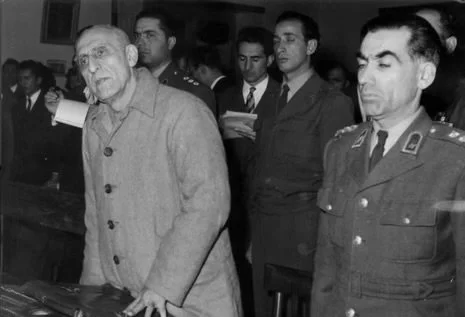
The Myth That the CIA Overthrew Iran’s Government in 1953
Often one hears that the conflict between the Islamic Republic of Iran and the United States has its origins in a CIA coup in 1953 against a democratically elected government. But how much truth is there to these accusations, which some argue primarily serve the purpose of relativizing the aggressive policies of the Islamic Regime in Tehran?
An Established Monarchy Long Before 1953
Reza Shah Pahlavi had already been ruling Iran since the 1920s. In 1941, after pressure from the Allies during World War II, he abdicated and his son, Mohammad Reza Shah Pahlavi, took the throne. By 1953, the young Shah had been monarch for twelve years.
Iran in the early 1950s was a constitutional monarchy, not a modern liberal democracy. The Majlis voted on the Prime Minister, but political participation was limited and heavily influenced by elites.
Mohammad Mosaddegh became Prime Minister through this parliamentary mechanism. Supporters describe him as democratically chosen. Critics rightfully point out that he was selected in the same way as many prime ministers before him.
Constitutional Crisis
Tensions between Mossadegh and the Shah escalated over questions of authority. Mossadegh sought expanded executive powers and organized a referendum to dissolve the parliament.
Under the 1906 constitution, the Shah retained the authority to appoint and dismiss prime ministers. From this perspective, his decision to remove Mossadegh is constitutionally grounded and legal.
Unrest, Exile and Return
In August 1953, the Shah briefly left the country as unrest intensified. Shortly afterward, anti Mossadegh demonstrations grew, and elements of the military moved against the Prime Minister. The Shah returned within days.
Mossadegh faced serious domestic opposition. Political rivals, segments of the clergy, and parts of the military turned against him. Economic strain after the nationalization of the Anglo Iranian Oil Company added to instability and public dissatisfaction.
Even without outside involvement, Iran in 1953 was politically volatile. That volatility created conditions in which foreign intelligence services could exert influence.
Why 1953 Still Matters and Why It Is Debated
For many Iranians and many historians, 1953 represents a defining case of a constitutional correction during a period of crisis.
Public opinion inside Iran today is diverse and shaped far more by the 1979 Islamic Coup and its aftermath. Nevertheless the „CIA Takeover of Iran“ Myth persists.