
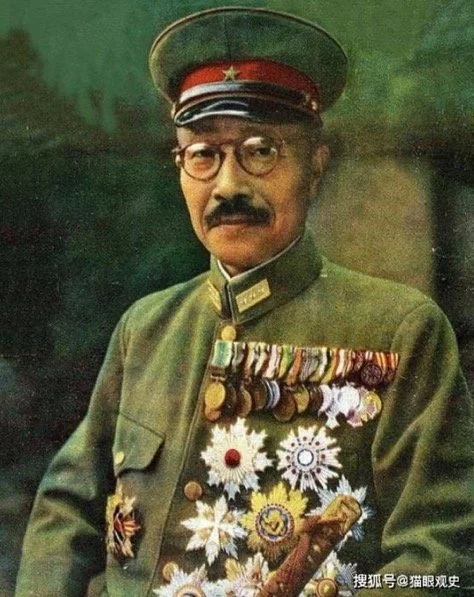
Japan 1910-1945: A narcissistic psychostate
When discussing the crimes of the Axis Powers, one thing becomes very obvious. Germany was responsible for the Holocaust and openly carries this responsibility to this day. Japan, on the other hand, has never done anything comparable, even though between 1910 and 1945 some of the worst crimes against humanity ever committed took place. The crimes of the Empire of Japan are documented and undeniable, yet they have never been fully acknowledged.
But why?
One of the reasons was the very mild peace terms of the United States. The emperor and the system were allowed to remain in place, and the Tokyo Trials were largely forgotten due to the Korean War. One of the Class A war criminals later became prime minister of Japan. For clarification, if the Allies had captured Adolf Hitler alive, he would have been convicted as a Class A war criminal.
The immense suffering Japan caused in Asia was planned and ideologically motivated. The massacre, or the so-called „Rape of Nanjing“ in 1937, was planned. It was an organized orgy of violence. Hundreds of thousands of civilians were shot in the streets, and almost all women and girls were systematically assaulted and enslaved. Among soldiers, there were competitions about who could rape the most women, and some civilians were covered in gasoline and then set on fire.
For Koreans, the suffering was not new. During the occupation from 1910 to 1945, Japan attempted to erase Korean identity. The Korean language was banned, and names were changed. Korean women were taken to military brothels as so-called „comfort women“. Many of these hundreds of thousands of women took their own lives or never spoke about what they had experienced all those years. In many Asian cultures, it was considered taboo to speak about such assaults, and many women hid until their deaths that their children had actually been conceived by Japanese soldiers during a rape.
The infamous „Unit 731“ shows how far this system went. There, people including Koreans, Chinese, and prisoners of war were abused while still alive and forced into human experiments. Similar to what happened in Auschwitz under Josef Mengele, bodies were treated as tools. Experiments involving freezing, biological weapons, and vivisections were carried out, the reality of which defies imagination. And it was not denied, but recorded, analyzed, and the test results were used by the Americans or the Soviets after the war. The research findings of these „scientists“ were too important during the Cold War.
Many do not see Japan as a perpetrator and genocidal regime, unlike Germany or the Soviet Union, because of the atomic bombs dropped on Hiroshima and Nagasaki. These bombings were, without doubt, tragedies. Innocent people died within seconds or suffered slowly from radiation effects. But they were unfortunately necessary because the Japanese state, which had been allied with Nazi Germany, did not want to surrender until the very end. Surrendering was seen as a „betrayal of the fatherland“.
For comparison, among Allied soldiers, one in three surrendered in battle, whereas among Japanese soldiers, only one in one hundred twenty did. Until the end, it was expected either to die honorably in battle or to commit „Ketsugo“. That is suicide to preserve one’s own honor and the honor of Japan. An Allied land invasion of Japan could have cost up to ten million lives on both sides. The two atomic bombs were hardly more destructive than the „conventional bombings“ of Tokyo, which, however, never led the Japanese leadership to reconsider the war effort. Even after both atomic bombs, the Japanese military still refused to surrender. Some planned to kill Allied prisoners of war and to continue the crimes in China and Korea. The end came not because Japan felt remorse, but because Emperor Hirohito had no choice. Even then, there was an attempted coup by some officers against Emperor Hirohito to prevent the surrender. Similar to the situation in the German Reich, the population was expected to commit collective suicide or die in battle in the event of such a defeat. This worldview reveals the morally corrupt nature of the society at that time. And even after Emperor Hirohito announced the surrender, entire armies in occupied China refused to lay down their arms.
And despite all of this, Japan has never officially apologized. There were isolated statements, but always with relativization. School textbooks play down the events or do not mention them at all. Similar to Holocaust denial, many people still deny these crimes or question the numbers of victims.
Time alone does not heal wounds, and silence certainly does not.
Germany chose the path of truth and coming to terms with its past. Japan never took this path because it never had to.
As long as Japanese society do not speak openly and unconditionally about their own past, the story remains incomplete. The pain does not persist because the oppressed Asian nations refuse to forgive, but because Japan either denies, relativizes, or even glorifies their crimes against humanity.